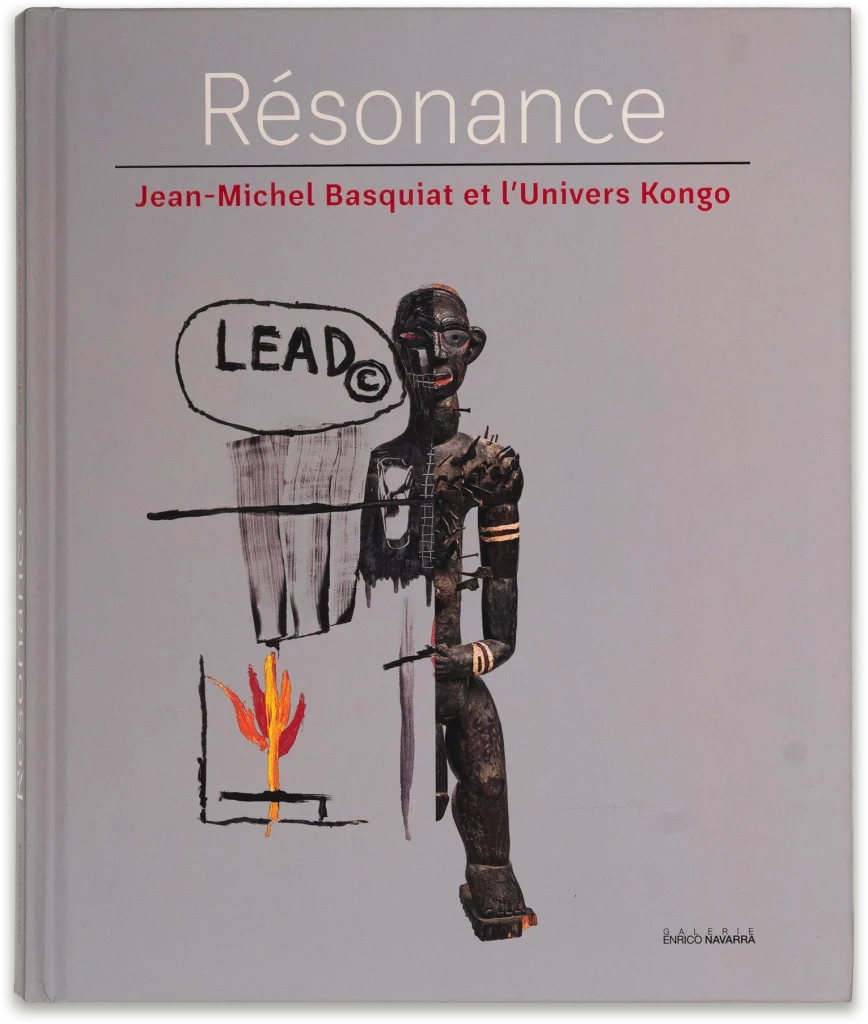
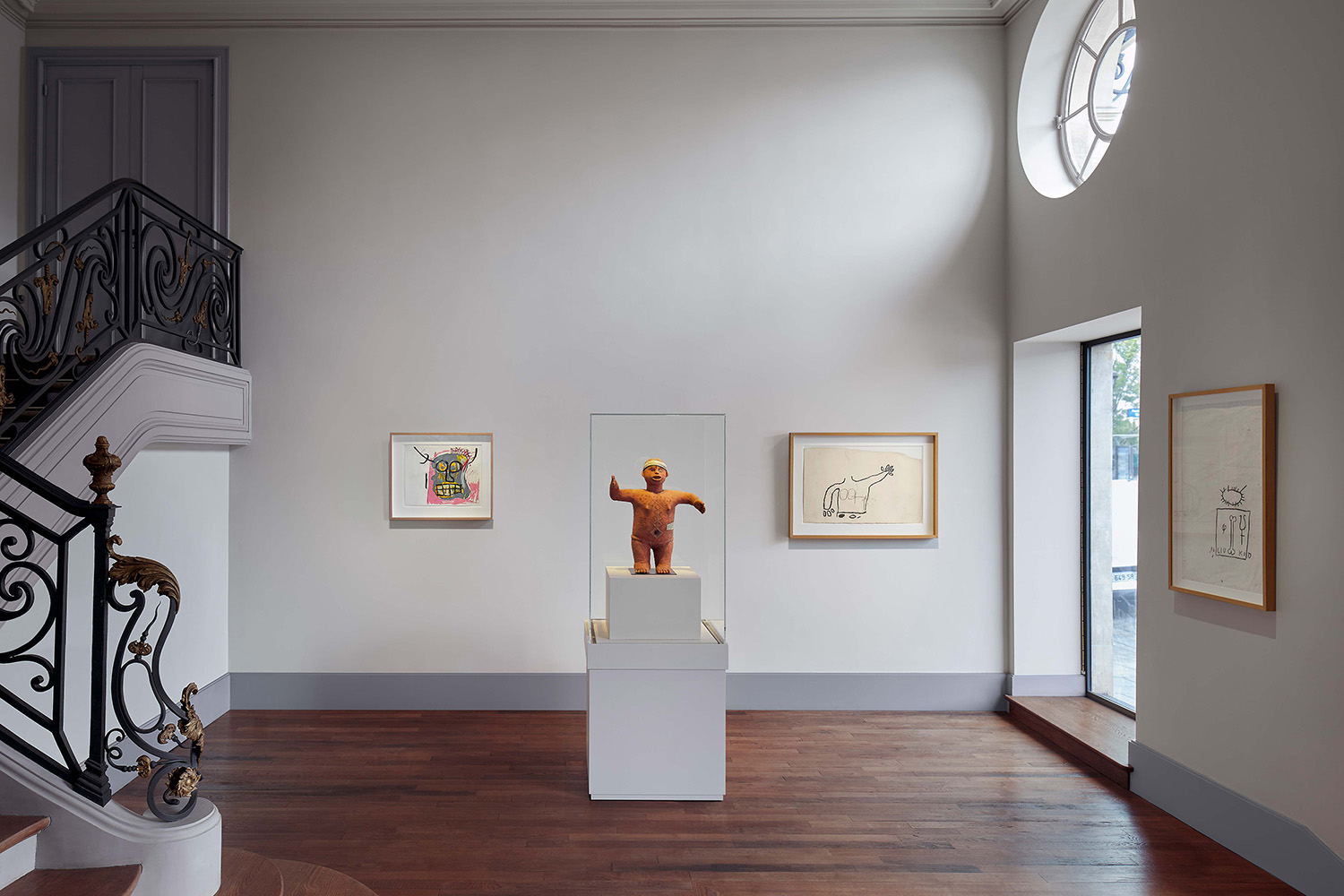

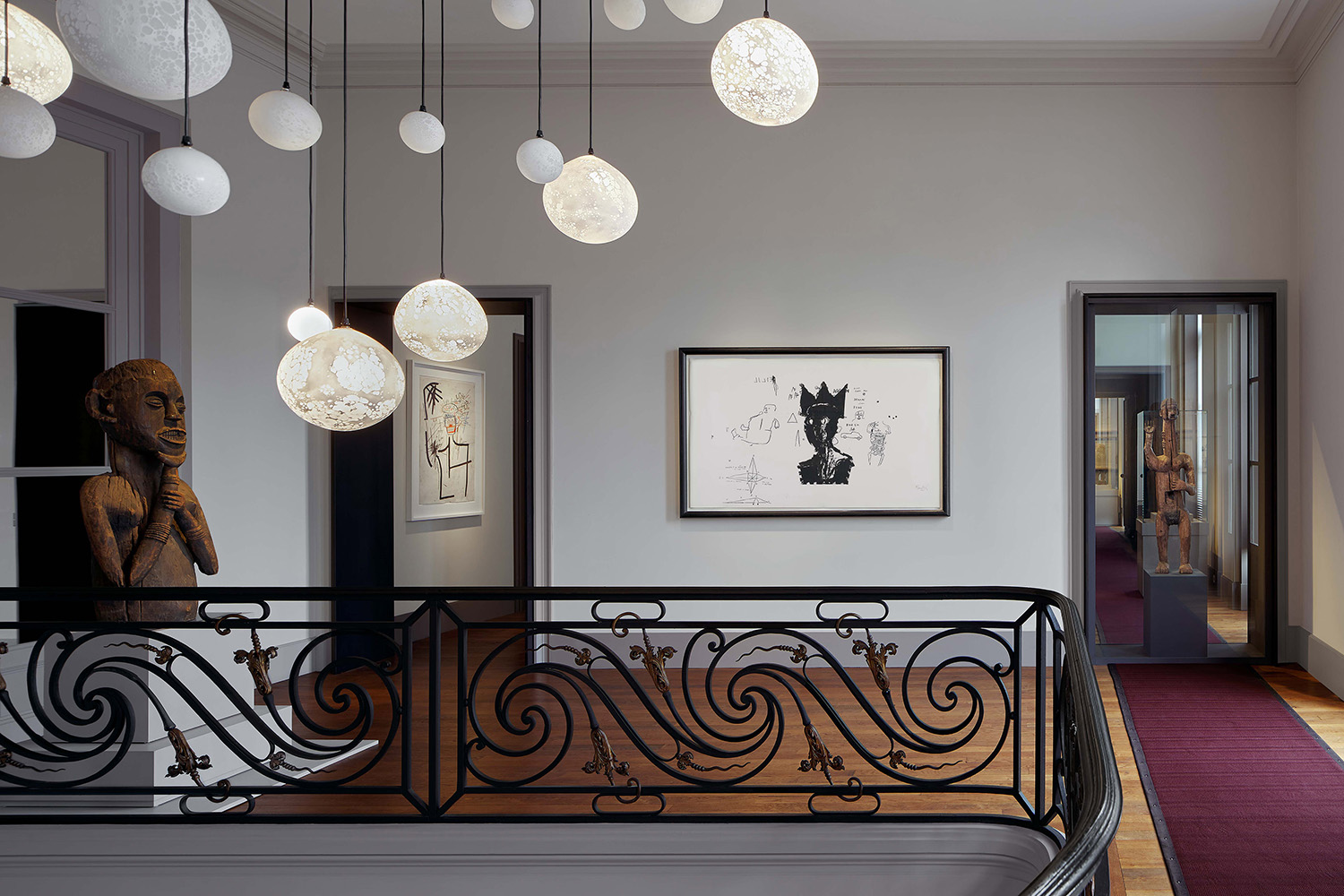
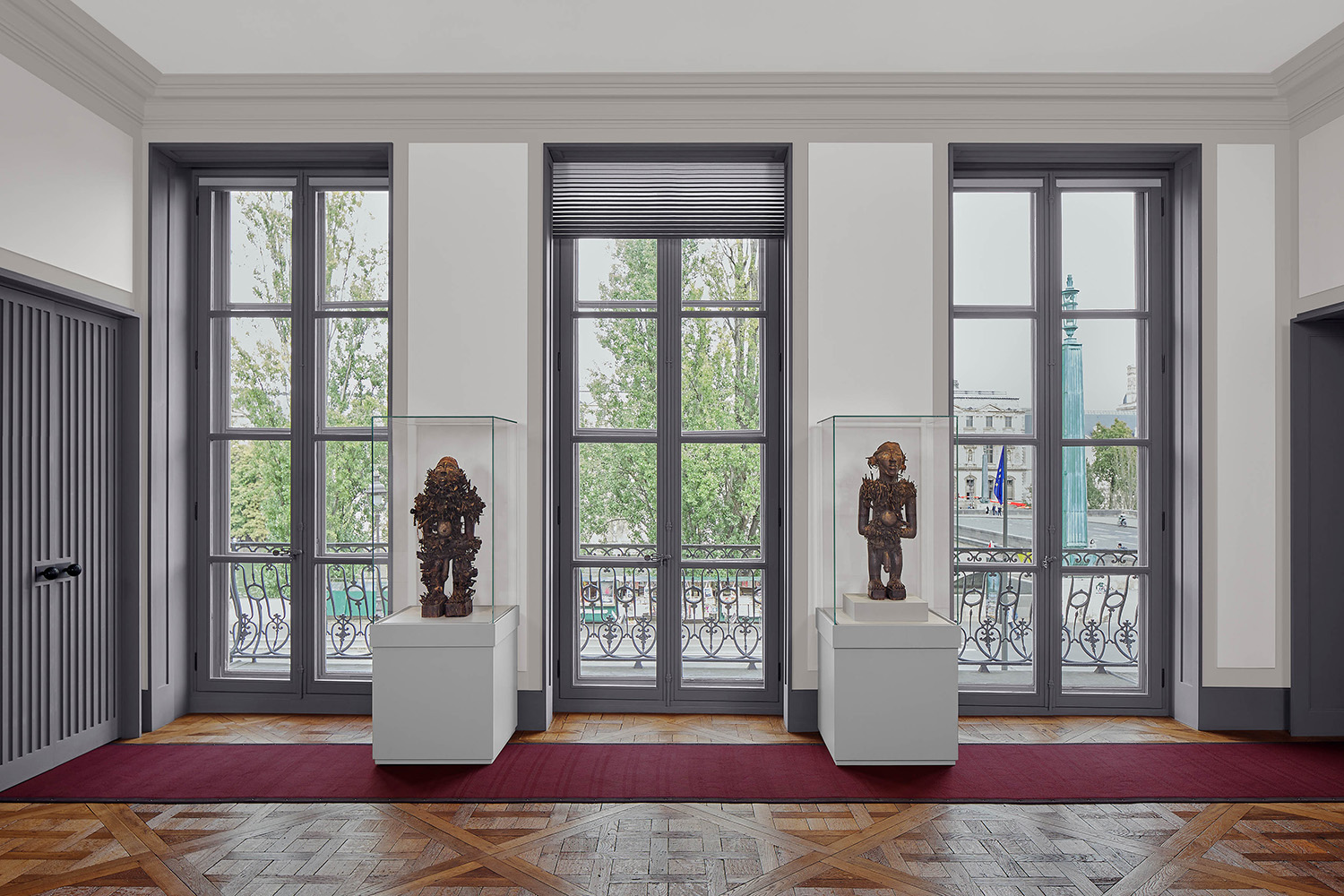
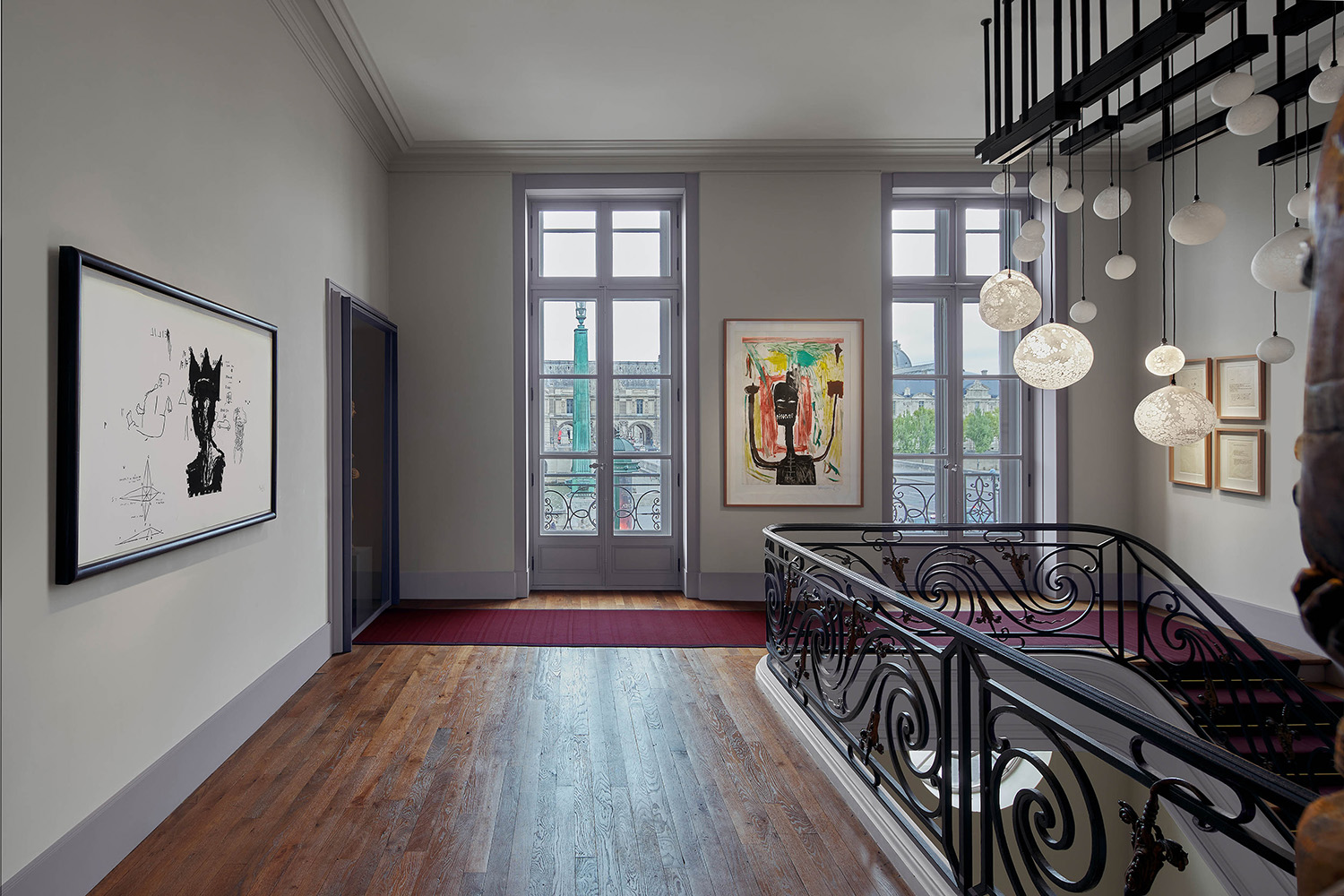
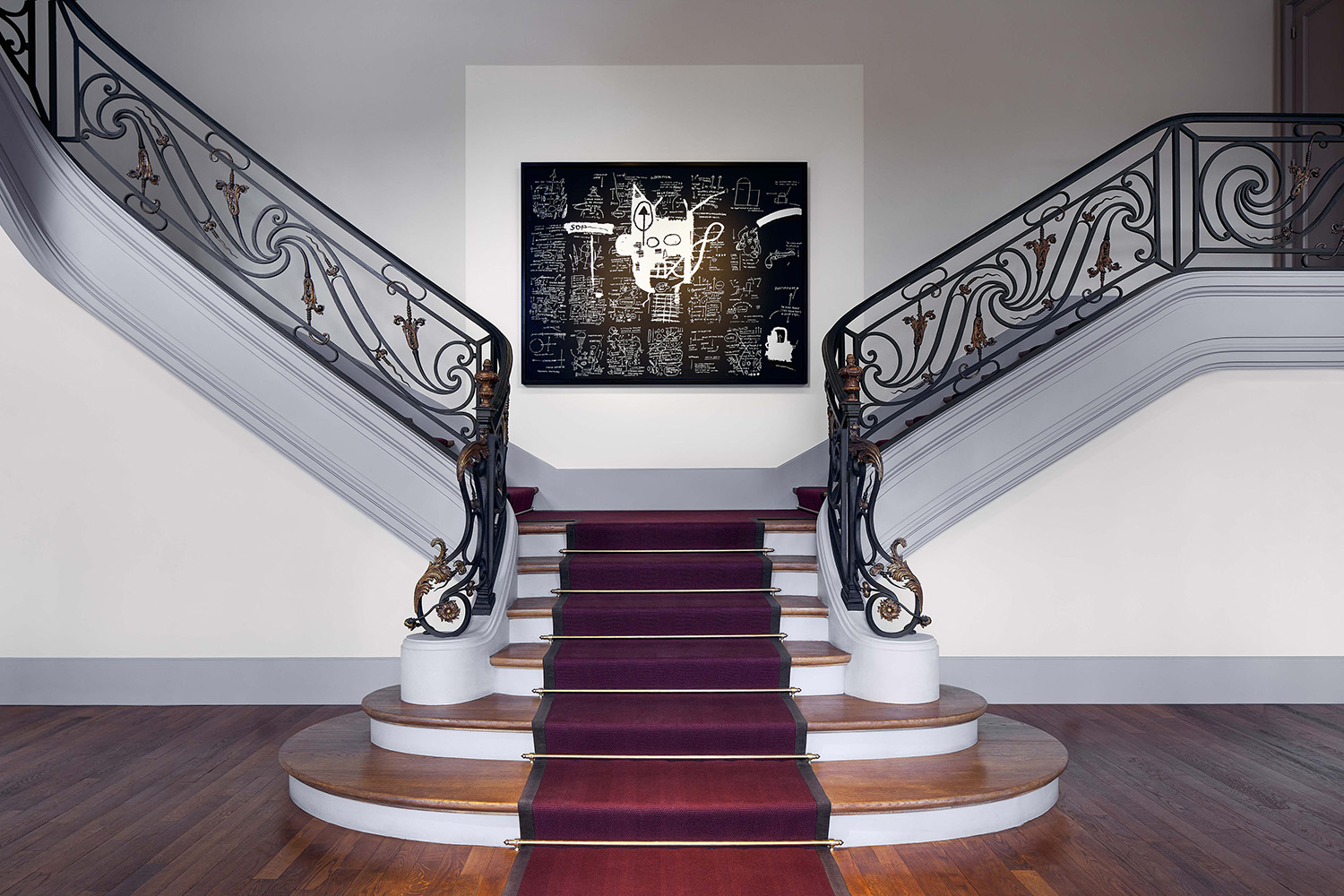
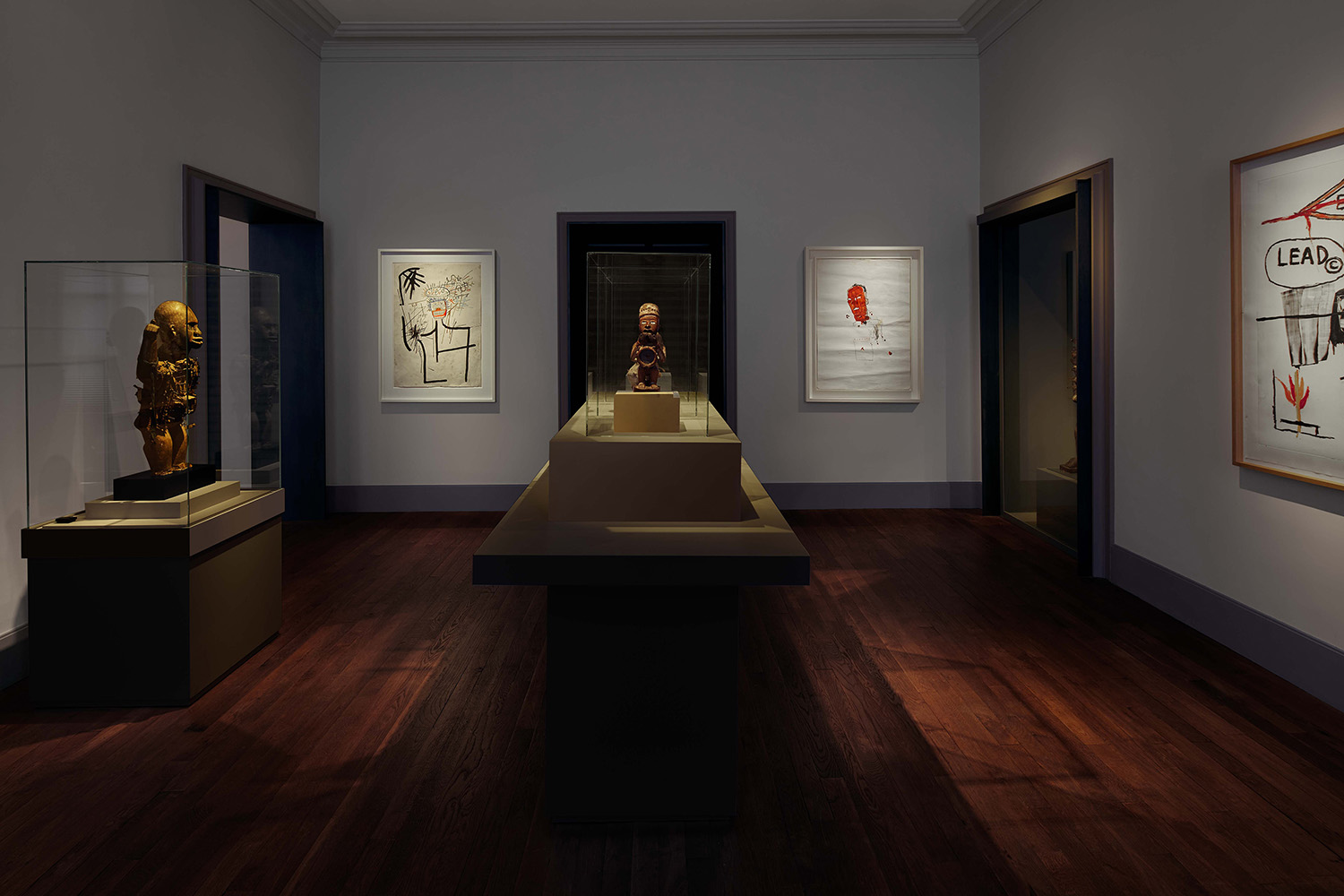
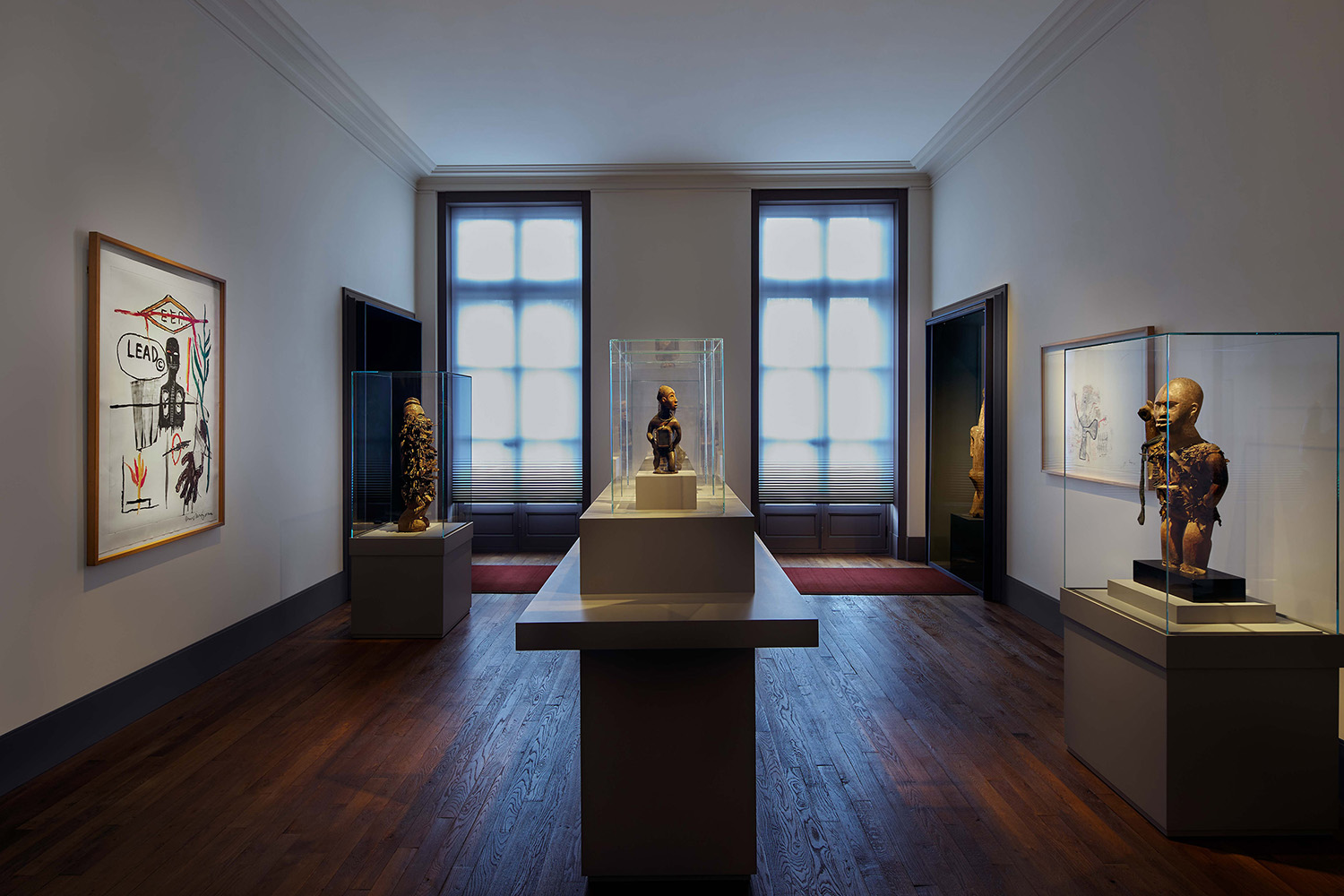
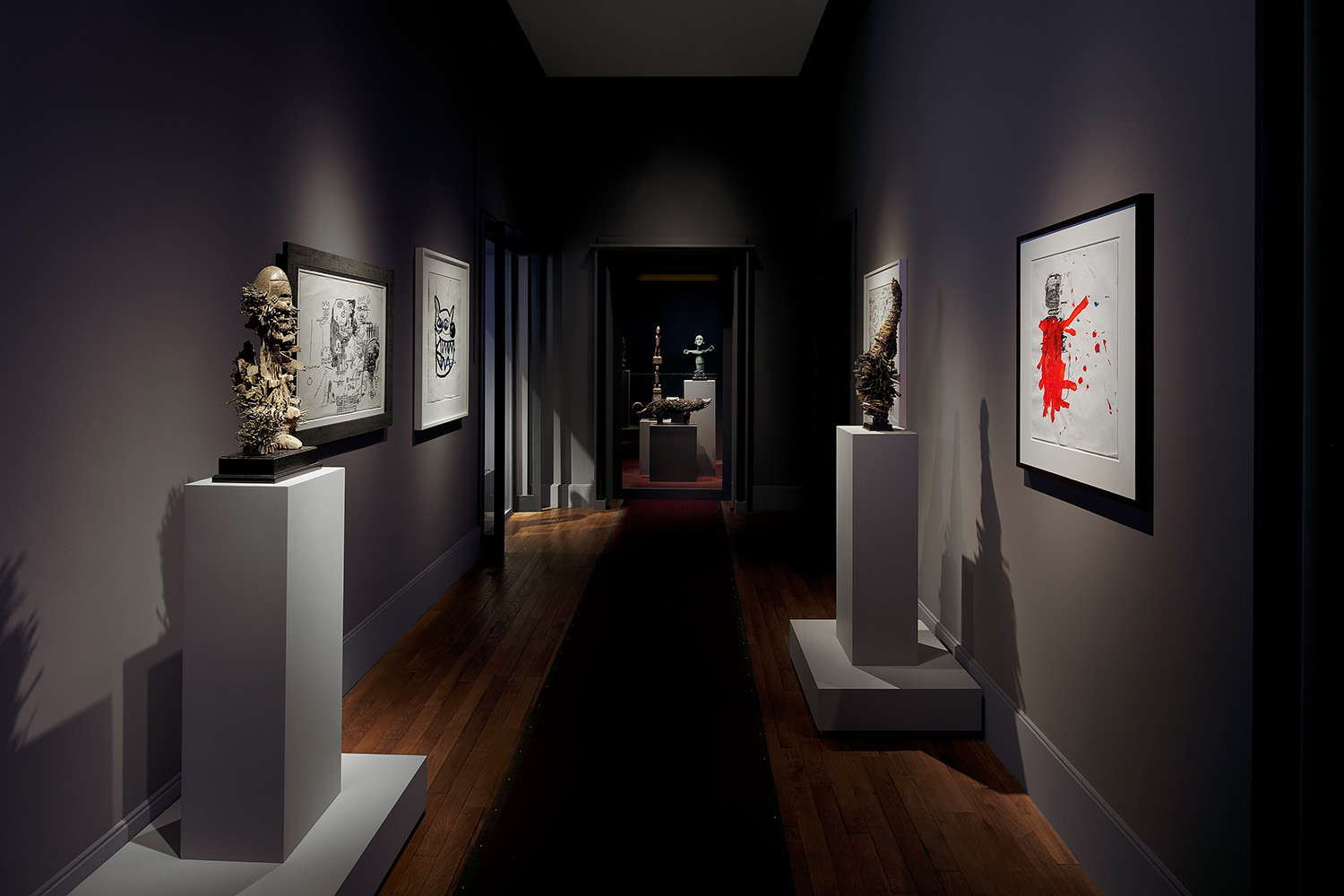
“What will happen when works of art as powerful as drawings by Jean-Michel Basquiat and nkisi, anonymous creations of the Kongo world, are brought together in the same exhibition? […] Communicating with the ancestors or redrawing the world stem from one and the same obsession: defeating death.”
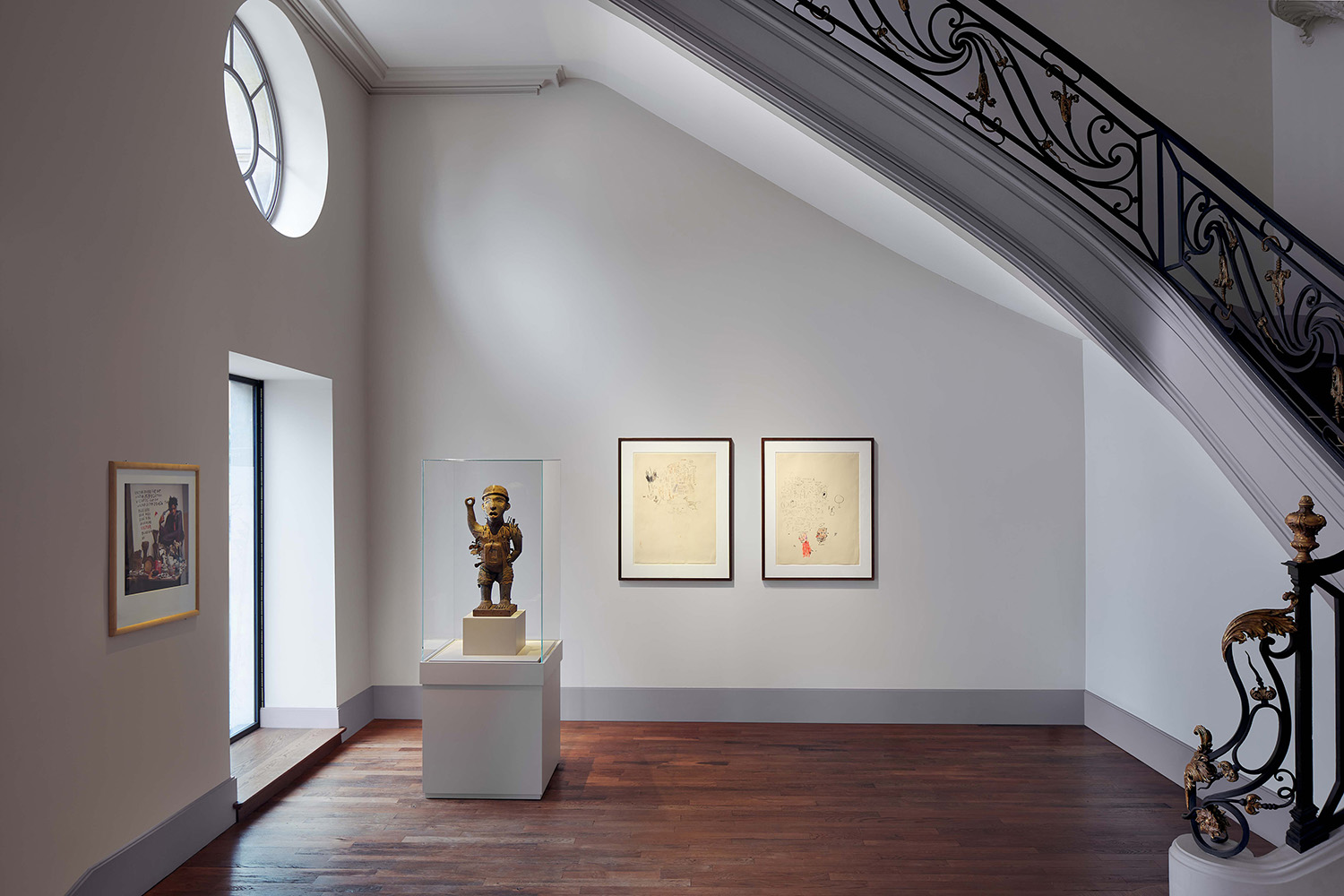
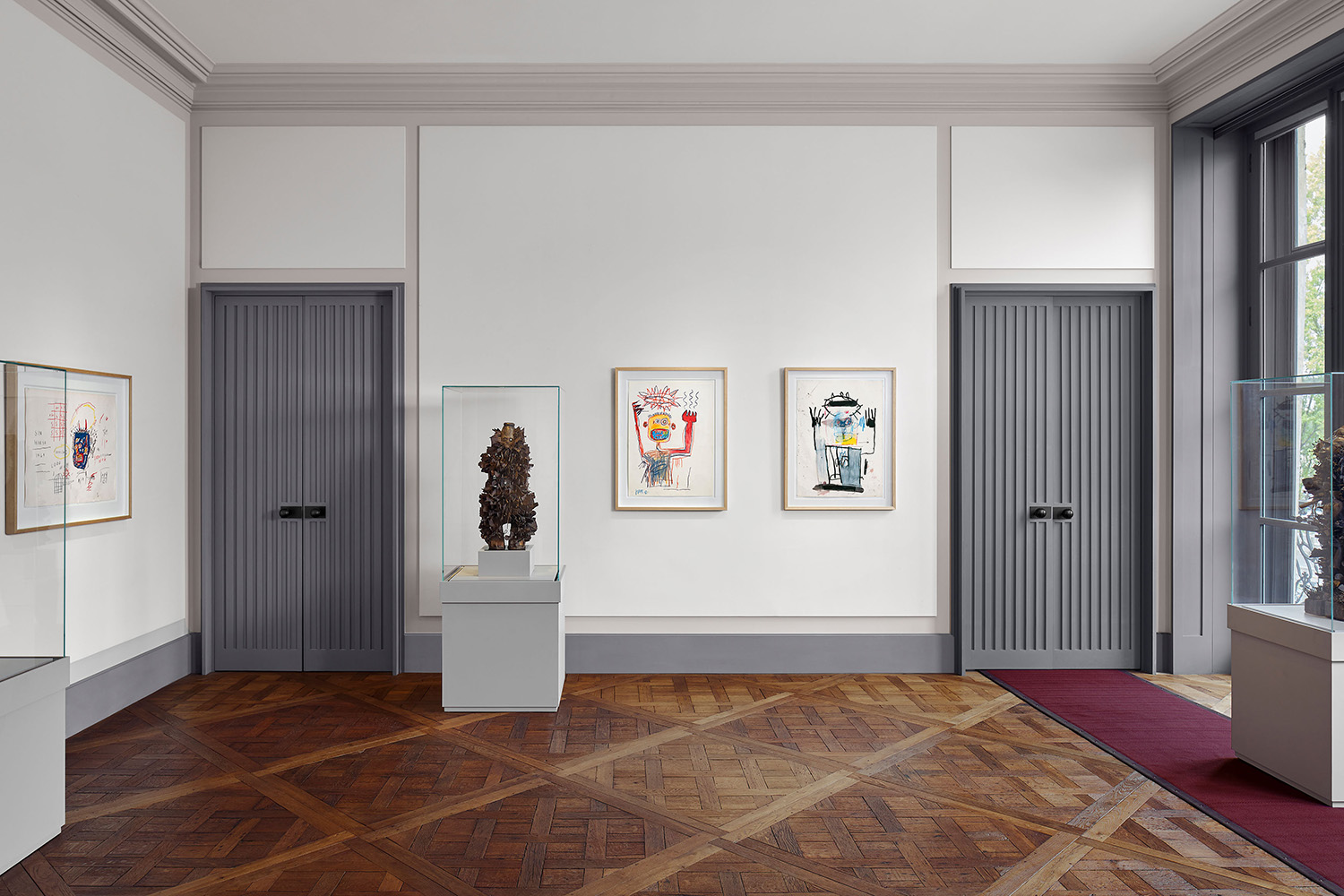
With these words, co-curator Bernard Dulon introduces the exhibition, whose structure he likens to a temple of “living pillars”, echoing Baudelaire’s Correspondances. Initiated by Enrico Navarra before his death in 2020, the project was carried through with Alexandra Dubourg, Doriano Navarra and Romain Brun (Galerie Enrico Navarra), who selected some twenty drawings by Basquiat made between 1981 and 1987. The Kongo section was entrusted to Julien Volper, curator at the Royal Museum for Central Africa in Tervuren, and to Bernard Dulon. Some twenty nkisi nkonde “nail fetishes” from the museum’s collections are shown to the public for the first time, in a scenography by René Bouchara spread over the two floors of the 17th-century mansion that houses Galerie Gradiva.
Dreaming of Africa
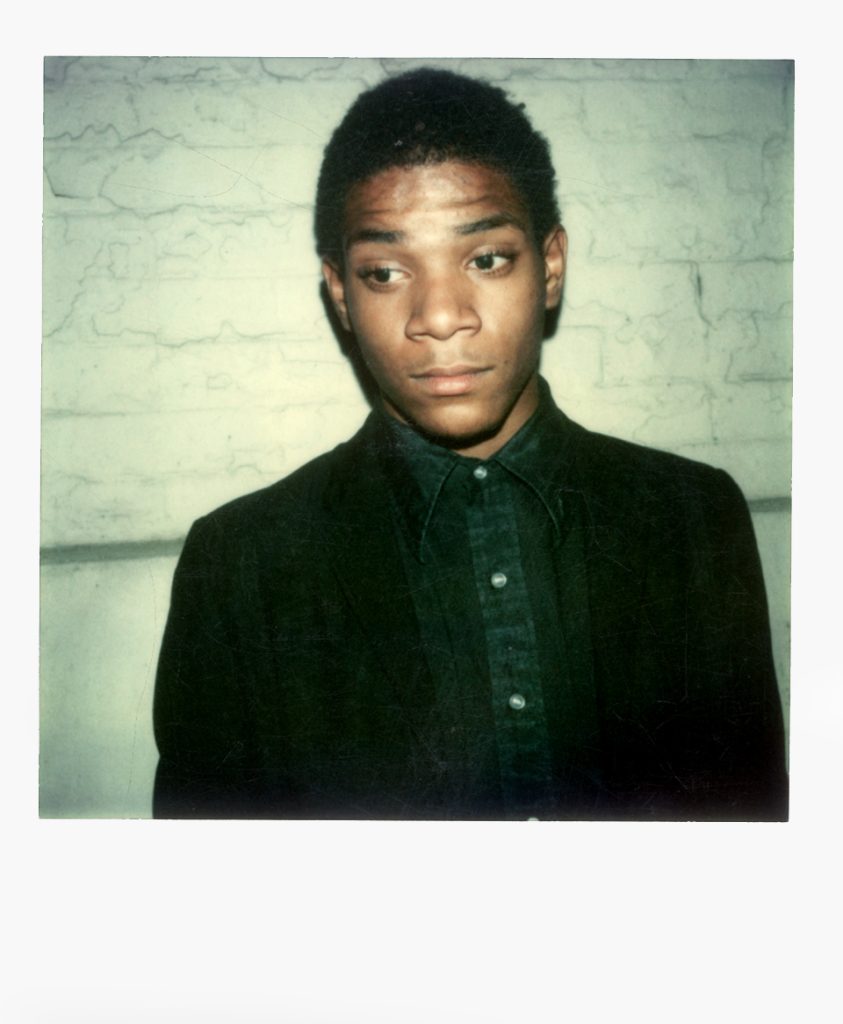
Born in New York in 1960 to a Puerto Rican mother and a Haitian father, Jean-Michel Basquiat grew up in Brooklyn. Self-taught and endlessly curious, he was also, in Ronald Reagan’s America, a witness to and victim of the racism endured by African Americans. His background led him to explore the traditions of the African diaspora.
In 1983, he was deeply moved by Robert Farris Thompson’s Flash of the Spirit, which traces the influence of African civilizations, including the Kongo world, on Black cultures across the Americas. He later met the author, with whom he had many conversations. In 1984, the controversial “Primitivism” exhibition at MoMA shook him in turn. In June 1986, he told Demosthènes Davvetas in Libération: “I have never been to Africa. […] But I have a cultural memory. I don’t need to look for it, it exists.”
Invited by the French Cultural Centre in Abidjan in October 1986, he travelled on to Korhogo, a village where sculpture had kept all its mystical power. He dreamed of returning, but died in New York on August 12, 1988, the day before he was due to leave for Abidjan.
Nkisi nkonde, objects of power
Nkisi nkonde were powerful fetishes known to certain Kongo groups in Angola and the two Congos. Rare and costly to make, they were used by an nganga (ritual specialist) to cast spells, hunt down wrongdoers and sorcerers, or heal certain illnesses. A source of prestige for a village, they could even be “hired out” to another. The blades and nails driven into the wood served to activate their powers. Some sculptors reproduced the symptoms of disease on the body of the nkisi, figures that seem to echo Basquiat’s Gray’s Anatomy works. Other nkisi took the form of a dog, an intermediary between the living and the dead.
Résonance
Basquiat’s work features figures pierced with spikes or brandishing weapons, and wooden boards covered in nails, all of which recall the nkisi nkonde. These parallels nevertheless remain suggestive. Julien Volper raises the question: such figures appear well before Basquiat read Thompson, and “the Kongo-Basquiat union is truly born with Thompson, and perhaps even through Thompson.” As early as 1981, Thompson had published The Four Moments of the Sun, rich in images of nkisi, but there is no evidence that Basquiat knew it before they met. In 2014, Thompson linked to the Kongo world a 1985 painting, Zydeco in the Context of the Media, which Basquiat had given him and dedicated “To RFT” at their first meeting, and which he sold at Sotheby’s in 2020. Does this reflect the artist’s real intent, or the researcher’s interpretation?
Above all, the exhibition is an aesthetic experiment: bringing together Basquiat’s dazzling works on paper and the protective forces of the great nkisi nkonde sculptures, masterpieces of expressiveness from the magical world of the Kongo peoples.